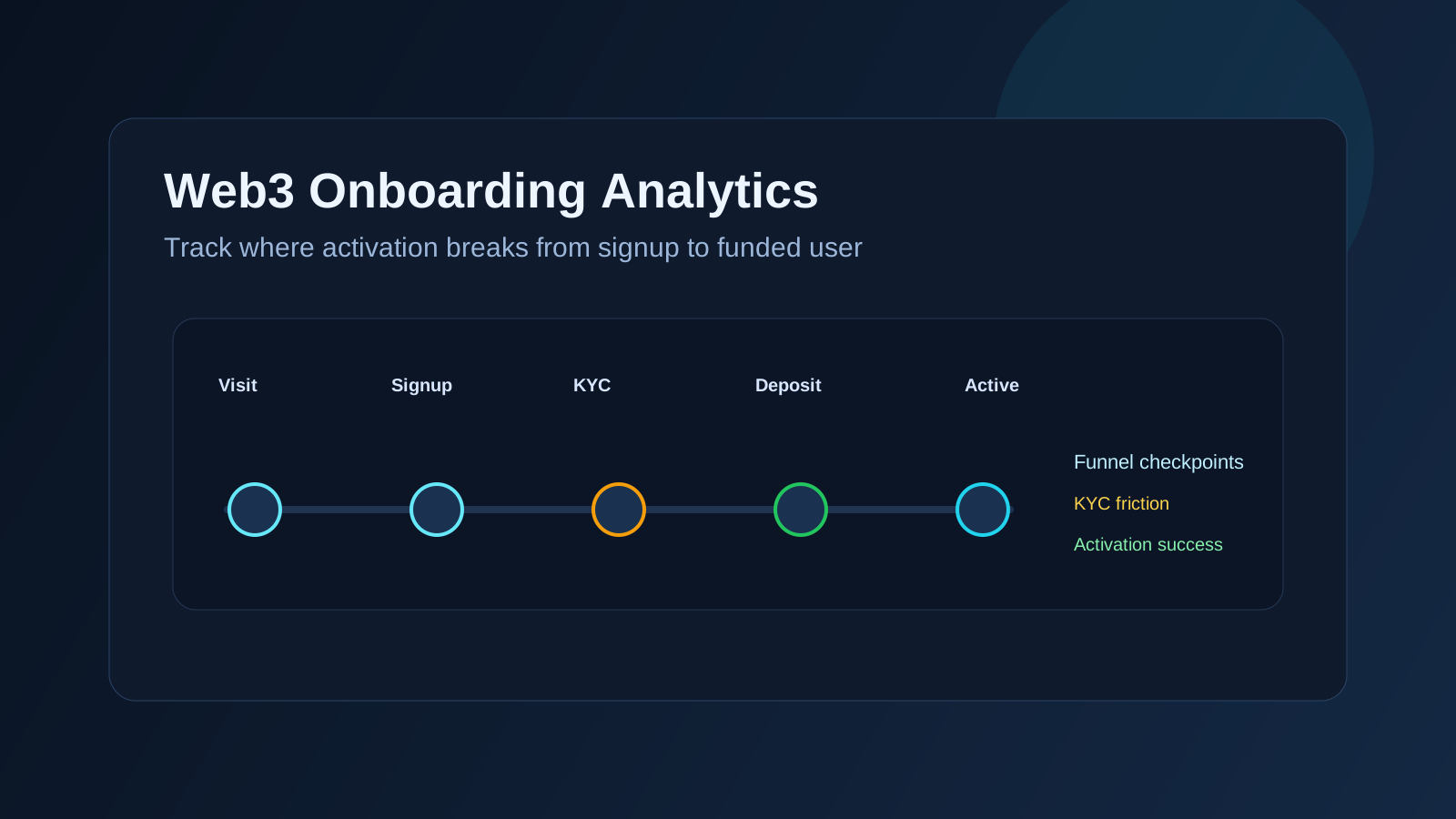
Web3 Onboarding Analytics: How to Measure and Improve User Activation Across the Full Funnel
Web3 onboarding is where many products lose otherwise promising users.
Get Your Free Crypto Funnel Audit
Upload your CSV and instantly see where users drop off from install to first deposit — free.
Web3 Onboarding Analytics: How to Measure and Improve User Activation Across the Full Funnel
Web3 onboarding is where many products lose otherwise promising users.
People arrive curious, but curiosity alone is not enough. If onboarding is confusing, trust is weak, or the next action is unclear, users drop before reaching activation. That is why Web3 onboarding analytics matters. It helps teams understand exactly where new users get stuck and what to improve first.
This guide explains how to measure Web3 onboarding effectively and use analytics to drive better conversion, activation, and retention outcomes.
What Is Web3 Onboarding Analytics?
Web3 onboarding analytics is the process of tracking how users move through the activation journey after first touch. Depending on the product, that journey may include:
- app install or landing page visit
- wallet connection or account creation
- registration
- KYC
- deposit or funding
- first transaction
- repeat usage
The goal is to identify the points where intent is lost and friction becomes expensive.
Why Web3 Onboarding Is More Fragile Than Traditional App Onboarding
Web3 users often face more decisions and more perceived risk. Even simple actions may feel intimidating if users do not understand:
- what the product does
- why they need to verify identity
- how funding works
- whether the platform is secure
- what the next step should be
These uncertainties make onboarding analytics especially valuable.
The Core Metrics to Track
- visit-to-signup rate
- signup-to-KYC start rate
- KYC completion rate
- funding rate
- first transaction rate
- time-to-activation
- D7 retention
- activation by channel
- activation by country
These metrics reveal where the experience is failing and for whom.
The Most Important Onboarding Drop-Off Points
From landing page to signup
This stage reveals whether audience intent and messaging alignment are strong.
From signup to KYC
This often reflects trust, motivation, and onboarding clarity.
From KYC to funding
This stage is highly sensitive to payment UX, perceived complexity, and urgency.
From funding to first transaction
This shows whether users understand how to get value from the product after activation.
Each stage should be tracked separately.
How to Diagnose Onboarding Problems
A practical diagnostic process looks like this:
- Measure stage conversion for the last 30 days.
- Compare performance by country, platform, and source.
- Identify the largest volume-weighted drop-off.
- Review the UX and messaging around that stage.
- Test one focused change.
- Re-measure downstream impact.
This avoids broad redesigns based on guesswork.
Common Causes of Web3 Onboarding Friction
- unclear value proposition
- too many early decisions
- low trust around identity or funding
- weak mobile UX
- confusing wallet or payment flows
- poor handoff between approval and action
Analytics helps teams separate which of these is actually happening.
Why Segmentation Matters
Onboarding performance is rarely uniform. You may find that:
- one country struggles with KYC
- one device type has weak funding conversion
- one traffic source produces low-intent signups
- one campaign drives better activation despite higher CPI
That is why onboarding analytics should always support segmentation.
Experiments That Improve Onboarding
- stronger progress indicators
- better trust messaging
- improved field guidance
- localized KYC instructions
- clearer post-approval CTAs
- simpler first-use education
The best experiments remove uncertainty, not just clicks.
Onboarding Analytics and Revenue
Onboarding analytics is not just a UX function. It affects:
- CAC efficiency
- cost per funded user
- payback period
- channel quality evaluation
- retained value
That makes it a core commercial discipline, not just a product dashboard.
How Crypto Funnel Analyzer Helps
Crypto Funnel Analyzer is useful for Web3 onboarding because it shows the full path from acquisition to monetization in one place. Teams can identify where users drop, compare segments, and prioritize the highest-impact bottlenecks quickly.
That kind of visibility is much harder when onboarding data is fragmented across tools.
SEO Value of This Topic
This content supports high-intent search terms such as:
- Web3 onboarding analytics
- crypto onboarding funnel
- onboarding analytics for exchanges
- Web3 activation metrics
- crypto KYC onboarding optimization
- user activation for crypto apps
These keywords fit the niche well and attract relevant operators.
Final Takeaway
Web3 onboarding analytics helps teams understand where activation breaks and how to fix it with data instead of assumptions. When you measure the journey clearly and improve the highest-friction stage first, conversion quality rises and acquisition becomes more profitable.
If your onboarding reporting stops at signup, you are missing the stages that matter most for activation and revenue.
What a Good Web3 Onboarding Dashboard Includes
A useful onboarding dashboard should not only show top-line conversion. It should help the team identify which part of the journey needs work right now.
Strong onboarding dashboards often include:
- visit-to-signup rate
- signup-to-KYC start rate
- KYC approval rate
- funding rate
- first transaction rate
- time-to-activation
- activation by source, geo, and platform
This combination helps separate messaging problems from product friction.
Why Time-to-Activation Matters
Two onboarding flows can have the same total activation rate and still behave very differently. One may move users quickly and confidently into the product. The other may require repeated visits and lose momentum along the way.
That is why time-to-activation is so important. Faster activation often signals stronger clarity, better trust, and better user intent.
Common Web3 Onboarding Fixes
- clearer product explanation before account creation
- stronger progress indicators
- simpler document and identity instructions
- better post-approval next steps
- less technical language for new users
- more relevant payment or wallet guidance
The most effective fixes reduce uncertainty at the exact moment it appears.
FAQ: Web3 Onboarding Analytics
Is onboarding analytics mainly a product function?
No. It directly affects CAC, funded-user volume, and channel quality, so growth teams should care deeply about it too.
What is the most important onboarding stage to optimize?
The stage with the highest volume-weighted drop-off and the strongest revenue connection. In many crypto products, that is KYC or deposit activation.
Can onboarding analytics help organic growth too?
Yes. Better onboarding improves the commercial value of every acquired user, regardless of whether they came from SEO, paid media, affiliates, or referrals.
Final Strategic Lesson
Web3 onboarding analytics matters because activation is where acquisition becomes business value. Teams that measure onboarding deeply can remove friction faster, improve monetization, and create better long-term retention from the same traffic base.
That makes onboarding one of the highest-leverage analytics disciplines in the entire funnel.
A Step-by-Step Onboarding Audit
If your current onboarding feels weaker than it should, run a structured audit.
Start by measuring stage conversion for the last 30 days. Then break that down by channel, device, and geography. After that, watch the actual flow for the highest-volume segment with the largest drop-off. Very often the problem becomes obvious when the experience is viewed in sequence rather than in isolated screens.
Finally, compare activation speed for successful users against unsuccessful users. This often reveals where momentum breaks.
Why Messaging Continuity Matters
One major source of onboarding leakage is mismatch between acquisition messaging and the first product experience. If ads promise simplicity but the signup and funding flow feel technical, users lose trust quickly.
That means onboarding analytics should not start only after signup. It should also evaluate whether traffic expectations and product reality align well enough to preserve intent.
Teams That Should Own Onboarding Analytics
The best results usually come when onboarding analytics is shared across:
- growth
- product
- analytics
- compliance
- operations
That cross-functional view matters because onboarding friction in crypto often sits at the intersection of multiple teams.
Onboarding Optimization Checklist
- define every onboarding stage clearly
- measure conversion and time-to-activation
- segment by source, geo, and device
- review the highest-friction step first
- launch one focused experiment at a time
Why This Matters Commercially
Every onboarding improvement increases the value of paid, organic, and affiliate traffic at the same time. That is why strong onboarding analytics often produces returns far beyond the product team alone.
Example of an Onboarding Fix With Revenue Impact
Imagine a product where users complete signup but hesitate at the KYC or funding stage. The team improves the progress indicator, rewrites the trust messaging, and clarifies the next step after approval. Registration volume stays the same, but more users finish verification and more of those users fund accounts.
That kind of change may not look dramatic in a generic product dashboard, but in a crypto business it can lower effective CAC and increase monetization from every acquisition source at once.
Why Onboarding Improvements Compound
A stronger onboarding system does not just help one campaign. It improves the conversion value of paid traffic, organic traffic, affiliates, referrals, and direct visitors all at the same time. That compounding effect is why onboarding is often one of the highest-return areas for analytics-driven optimization.
CryptoFunnel Team
Crypto Analytics Experts
We help crypto and Web3 companies optimize their user acquisition funnels — from install to first deposit. Our analytics platform is trusted by 500+ teams worldwide.
Verified Data
Real campaign metrics
500+ Teams
Trust our platform
Always Current
Regularly updated